Contributing Author
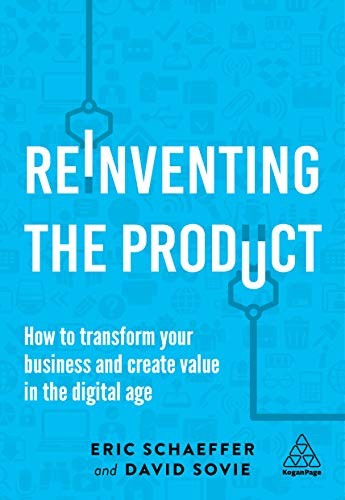
Reinventing the Product
Eric Schaeffer & David Sovie · Kogan Page, 2019
Dave contributed the SMART VOICES feature "Engineering in the New in the Auto Industry" (pp. 183–189), exploring how agile engineering practices can be brought into automotive product development without losing the rigor that regulated industries demand. The section introduces the AutoScrum framework — a model for integrating agile methods with the realities of hardware-software co-development, systems integration, and compliance in complex vehicle programs.
David Rush
The Tao
of Flow
The craft of moving work through complex systems
FLOWCraft Series · Book One
The Tao of Flow
The craft of moving work through complex systems
Only three things flow through any organization: data, material, and cash. Every framework, methodology, and tool you've ever adopted exists to move one of these three things faster, with less waste, and with greater predictability. Yet most organizations optimize each flow in isolation — and then wonder why the system doesn't improve.
The Tao of Flow connects the dots that took three decades to see — from Shewhart's statistical thinking through Senge's systems dynamics, lean production, agile methods, and now AI — into a single coherent philosophy of how work moves through organizations building complex products.
Read the Book
Chapters
Preface: Why This Book Exists
In February 1993, W. Edwards Deming signed my copy of Out of the Crisis. He was 93 years old. He would be dead within the year. I was too young to understand what he was really telling me. It took me thirty years to figure it out.
The Three Flows
Only three things flow through any organization: data, material, and cash. Every framework, methodology, and tool exists to move one of these three things. The Tao is learning to see them as one system.
The Lineage
The ideas in this book have a century-long lineage. Understanding that lineage tells you when and how to apply each idea. Most of what passes for 'agile' today has forgotten its own roots.
The Learning Organization
Senge's five disciplines aren't HR programs — they're the operating conditions for flow. Without them, every process improvement is temporary.
Why Organizations Get Stuck
Organizations reach capability ceilings not because of talent gaps but because of structural constraints. The plateau model changes everything.
The Compliance Paradox
When compliance architecture is designed for flow rather than imposed on it, the same evidence that satisfies auditors also accelerates delivery.
Fewer, Better People
AI eliminates coordination costs. This restructures organizations fundamentally. The deeper question: what kind of people, what kind of leadership, and who shares in the value created.
The Craft of Flow
Flow isn't something you achieve — it's something you practice. This chapter is the toolkit: process behavior charts, flow metrics, Monte Carlo forecasting, and the daily discipline of making flow visible.
The Road Ahead
The Tao of Flow is Book One — the philosophy. The principles are complete. The practice has only begun. This afterword maps the road ahead.
The Central Thesis
Only three things flow.
Data. Material. Cash.
Every process improvement method — lean, agile, six sigma, DevOps — is an attempt to improve the movement of one or more of these three flows. The Tao is learning to see them as one system.
Requirements, designs, test evidence, compliance artifacts — the information that defines what to build and proves it was built right.
Components, assemblies, configured products — the physical and digital artifacts that move through design, integration, verification, and delivery.
Investment, cost, revenue — the economic flow that funds the work, determines viability, and ultimately judges whether the system produces value.
Who This Book Is For
Leaders building complex products in regulated industries
You've tried to be Lean. You've tried to become Agile. Maybe you played with Frameworks like SAFe or LeSS to scale Agility. You have the scars. And you still feel like something's missing.
Engineering Leaders
VPs and directors who know their teams are capable but can't figure out why delivery is slower than it should be.
Systems & Process Architects
Practitioners looking for a unifying principle that connects architecture, process, tools, and compliance.
Compliance Professionals
ASPICE assessors and quality leaders tired of compliance being the enemy of delivery.
The Lineage
Built on the shoulders of giants
This book synthesizes ideas from people I was fortunate enough to learn from directly — and from those whose work made mine possible.
W. Edwards Deming
Statistical thinking, System of Profound Knowledge
Learned directly at Ford, 1990s. Very proud he fired me in the legendary red bead experiment and signed my copy of Out of the Crisis, Feb 1993.
Peter Senge
Learning organizations, five disciplines
Having Peter help us at Ford was so impactful. I so misunderstood organizational learning before he worked with us.
Taiichi Ohno
Toyota Production System, flow, pull
The three M's: muda, mura, muri.
Daniel Vacanti
Flow metrics, probabilistic forecasting
The math that makes flow measurable.
L. David Marquet
Intent-based leadership
I managed to get Dave onto our podcast for a chat and I got "Dave- Thanks for your leadership." scribbled praise from this great leader himself.
Chester Barnard
Theory of authority
Authority rests with the subordinate, not the superior.
The FLOWCraft Series
One philosophy. Multiple applications.
A three-book arc from philosophy to operating model to daily practice — then domain explorations that apply the thinking to specific industries.
Core Arc
The Tao of Flow
The philosophy — why flow is the unifying principle beneath Lean, Agile, systems thinking, and compliance.
← In progressThe FABRIC of Flow
The operating model — FABRIC, LOOM, 3-5-7 governance, DRIPS, and AI-agent integration.
The Field Guide to Flow
Pocket-book format — PBC cards, Monte Carlo quick reference, sprint cadence templates, and daily practice tools.
Domain Explorations
Flow in Complex Engineering Organizations
Regulated, multi-discipline engineering — automotive, aerospace, medical devices, defense.
Flow in Software-Defined Vehicles
The transformation from mechanical platform engineering to SDV architectures.
Flow in Digital Product Development
SaaS platforms, digital services, and data-driven products.
Flow in Capital Projects
Capital-intensive programs — infrastructure, construction, energy, facilities.
Flow in Global Connected Systems
Technology networks operating across national boundaries — cellular, satellite, IoT, spectrum.
This series is being written in public
Follow along at flowcraft.blog where these ideas are being developed, tested, and refined.